
Around 2008, my friend Trent was telling me about his old job making wrought-iron light fixtures at a shop in Minnesota. He talked about welding the way some people talk about a place they used to live and still miss. He loved it. He was good at it. And somewhere in that conversation, I thought — wouldn’t that be an incredible birthday present.
I asked my wife for a welder for Christmas that year.
Trent gave me my first lesson. We didn’t make anything beautiful. We made a welding cart — something to hold the welder, the bottle, the miscellaneous tools you accumulate the moment you start. Functional. Ugly. Mine. That was the day I fell in love with it.
Trent had owned and restored about 80 motorcycles by the time I met him. He’d ride each one for a while, fix whatever needed fixing, then sell it and find another. He understood materials — what they wanted to do, how they behaved, where they failed. He had a saying he picked up at that ornamental iron shop in Minnesota.
Wood is good. But steel is real.
He wasn’t knocking wood — it’s beautiful material and we use plenty of it. But he understood the difference between them the way someone who works both materials does. Wood is a living thing. It moves. It reacts to moisture and temperature and time. You can love it and work with it, but you can’t entirely predict it.
Steel is consistent. Expose it to whatever you want — it’s going to be the same material on the other side. What you see is what you’re getting, and what you’re getting doesn’t change. That’s what he meant by real. Not that wood isn’t honest. Just that steel never lies about what it is.
He was right then. He’s still right now.
Trent passed a couple years ago. Parts of this business make me think of him from time to time — like when we hand-select steel for a piece.

Here’s what an 8-foot sheet of hot-rolled steel actually looks like.
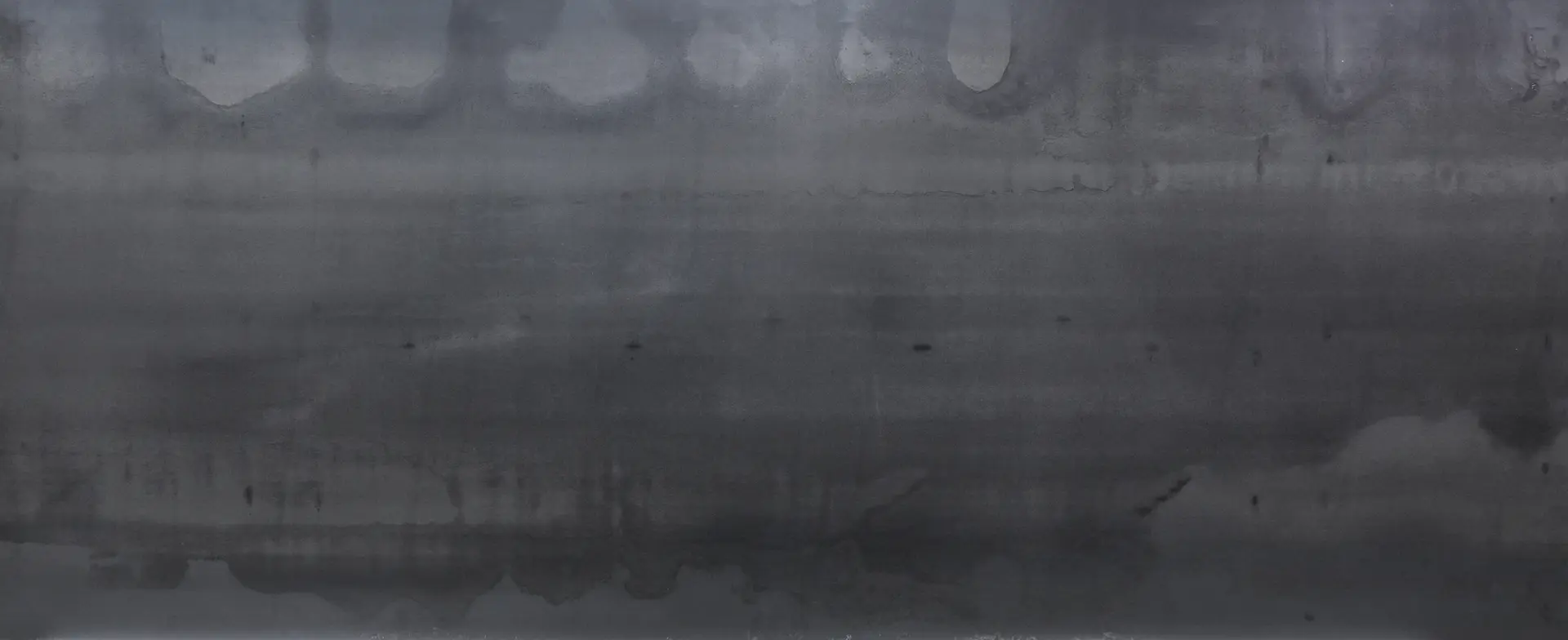
That’s the whole story, right there.
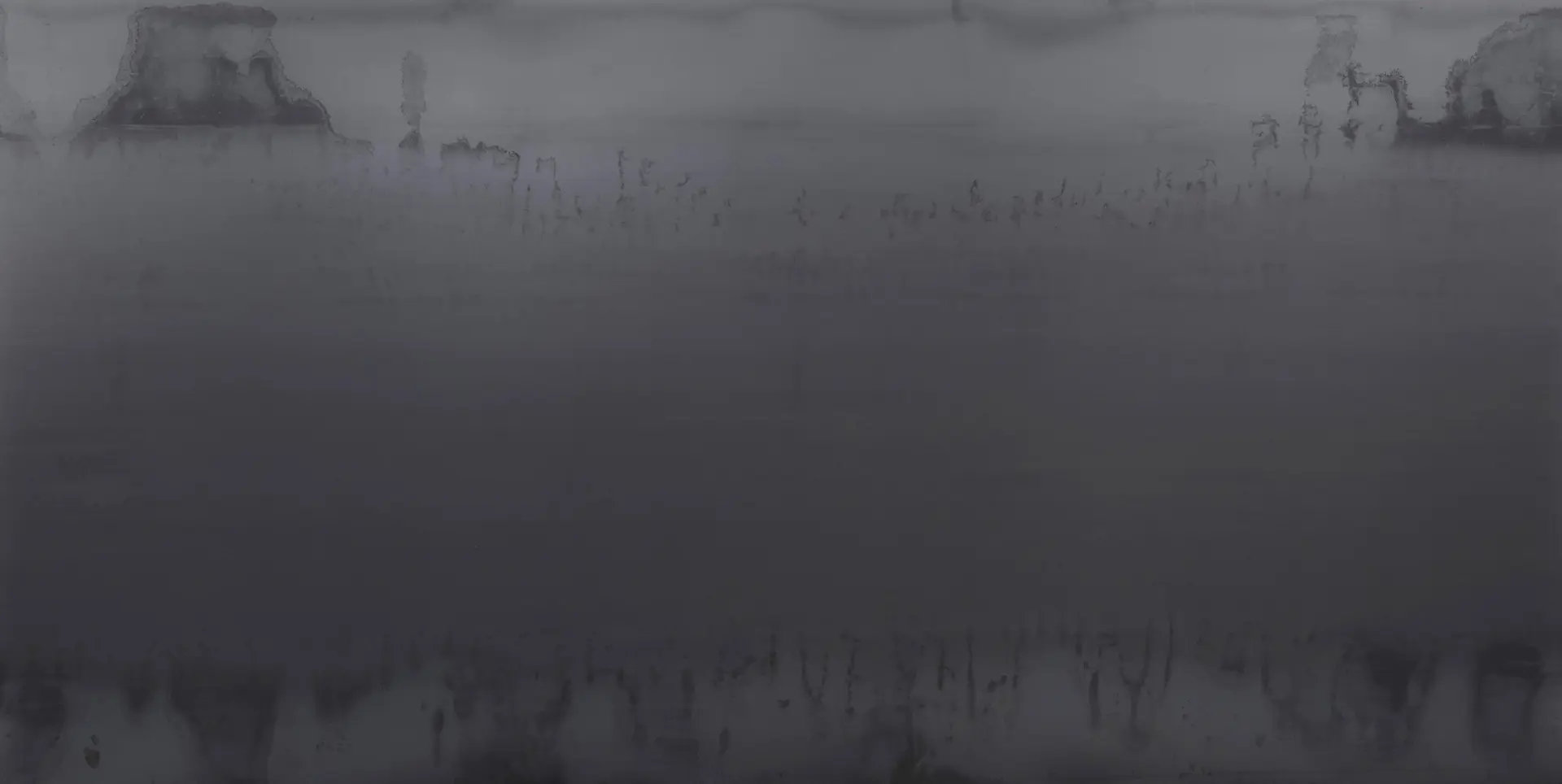
Most furniture makers look at this and see a problem to solve. Something to cover up.
We don’t.
When we hand-select steel for a piece, we’re looking at that grain. Looking at how the light moves across the surface, where the tonal shifts are, how this particular sheet wants to be read. That’s the selection process — not just “is this flat” or “is this the right gauge.” It’s: does this sheet have something to say?
Hot-rolled steel in its natural state carries a mill scale — a dark, mineral oxide layer that forms during the rolling process. We work with that. When you see a piece finished in natural steel, that’s the material showing you what it is. When it’s blackened, we’ve deepened that quality intentionally. Either way, nothing is being hidden.
Trent would appreciate that.
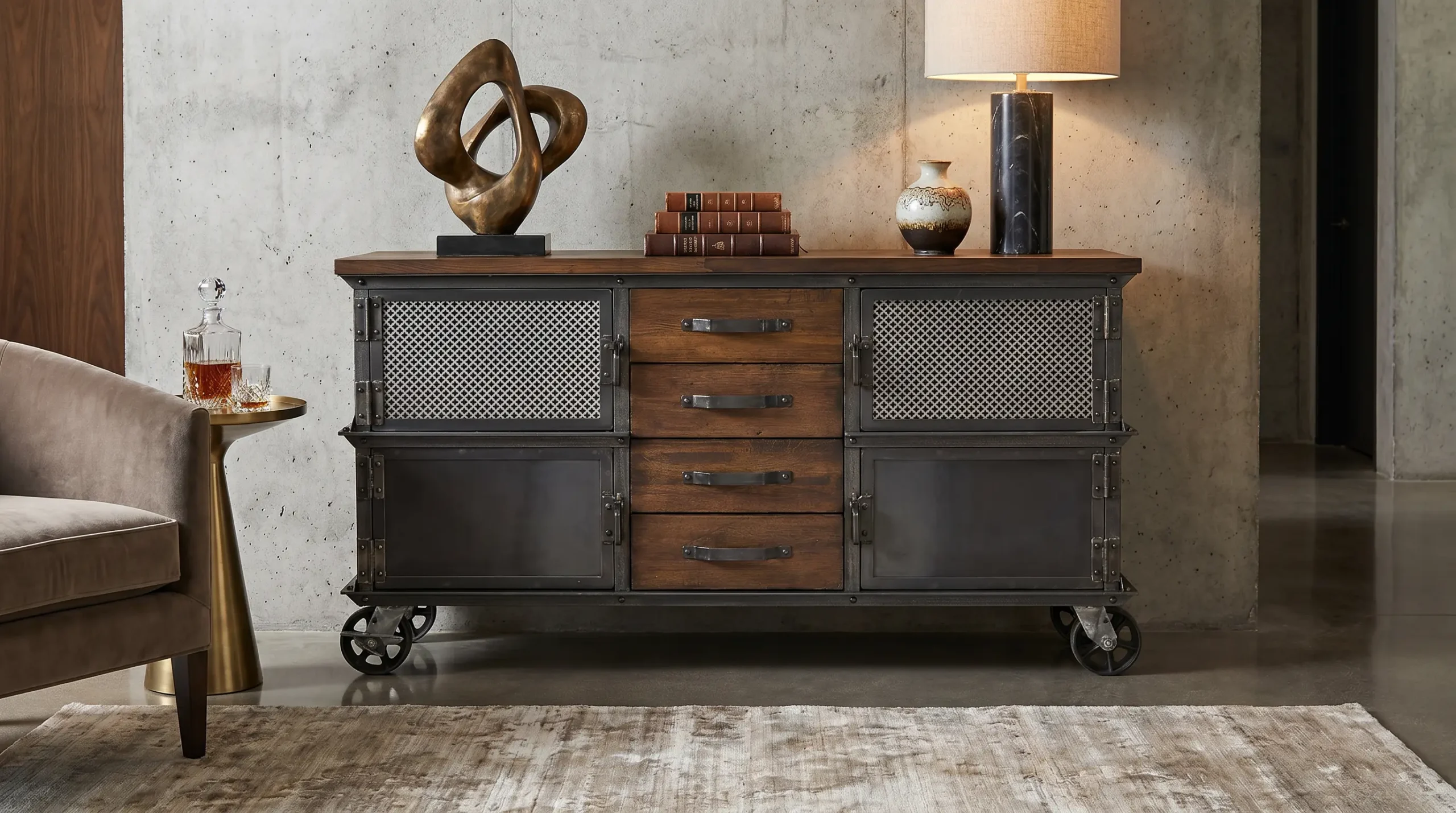

When someone buys a piece from our shop, they’re not getting something that looks like steel or feels like it might be. They’re getting the sheet we hand-selected, fabricated by someone who cares what the finished surface communicates — and sealed to last longer than either of us.
Steel is consistent. It doesn’t change. What you’re getting today is what you’ll have in twenty years.
Wood is good. But steel is real.
Trent taught me that in my driveway, standing next to a welding cart that was ugly and mine and exactly right. The company came after. The company is still built on it.