
The History of Industrial Furniture · Vintage Industrial
2009: A backyard, a welder, and a side table nobody asked for
My wife needed a table to go with two chairs she’d gotten for her birthday. I sat at a desk all day and missed working with my hands, so I got to work. She liked what I made — she has good taste — but I knew I could do better. So I made another one.
I’d just bought a welder having never welded before. With a quick lesson from a friend and some self-study, I felt ready. I started asking questions, coming up with designs, and just doing it. There were always people telling me I was going to fail. But they disappeared as the work got better.
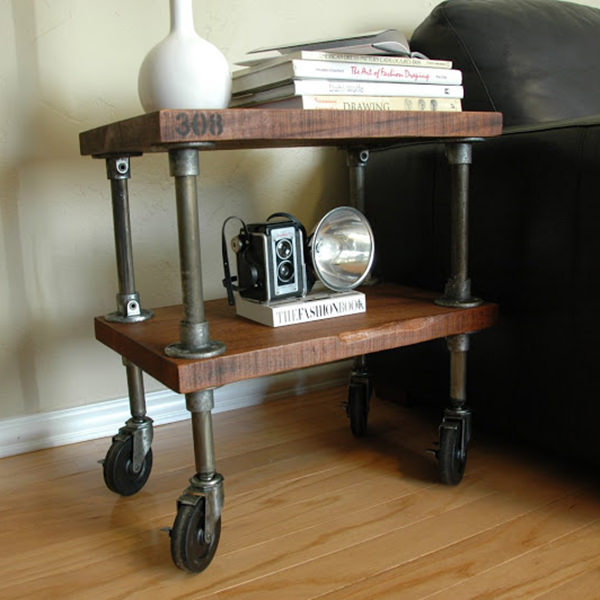
The first piece I offered for sale was a side table — iron frame, reclaimed wood top, hand-riveted construction, vintage patina. My aunt and uncle bought it. Not because I made it for them. They just wanted it. That told me something.
By November 2009 I had a small collection: coffee tables, side tables, a media console, a dining table. All made in the French industrial style of the 1940s — the era that first showed me what industrial aesthetics could look like when they were refined instead of just raw. I was selling from a blog. The pieces had prices on them. People were calling.
By December 2009 I had nine orders in a single week and a lead time of three to four weeks. I wrote a post that said “Happy Holidays” and meant it.
What the market looked like in 2009
When I started, the options for someone who wanted industrial furniture were: buy an antique or find something repurposed at a salvage yard. There was no one building new custom pieces in hot-rolled steel and solid hardwood and shipping them to order. The only company I found selling anything in the category was Duration — mass-produced in Asia, nothing custom, nothing structural. Restoration Hardware was selling traditional and French provincial. Nobody was doing what I was doing.
I wasn’t consciously building a market. I was solving a problem for myself and finding out that other people had the same problem. They wanted something that looked industrial because it was industrial — not because a designer had stamped a factory-worker motif onto a particle board frame.
2010: The first restaurant commission, Apartment Therapy, and the move to scale
In late 2009 I got a call from a dessert company in New York City called DessertTruck. They were opening a restaurant on Clinton Street and wanted cafe tables. I built five of them — 20 inches tall, butcher block tops, natural steel patina. They shipped to New York. A few months later, Apartment Therapy’s sister site featured the work. The local Phoenix paper covered it. I was getting 10,000 website visits a month.
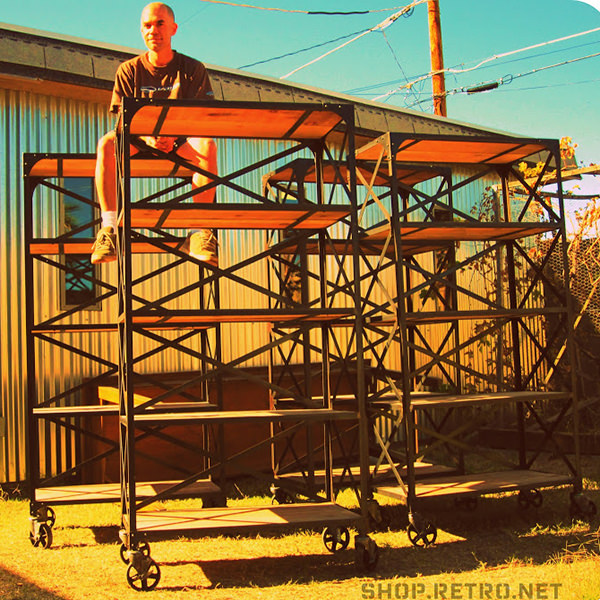
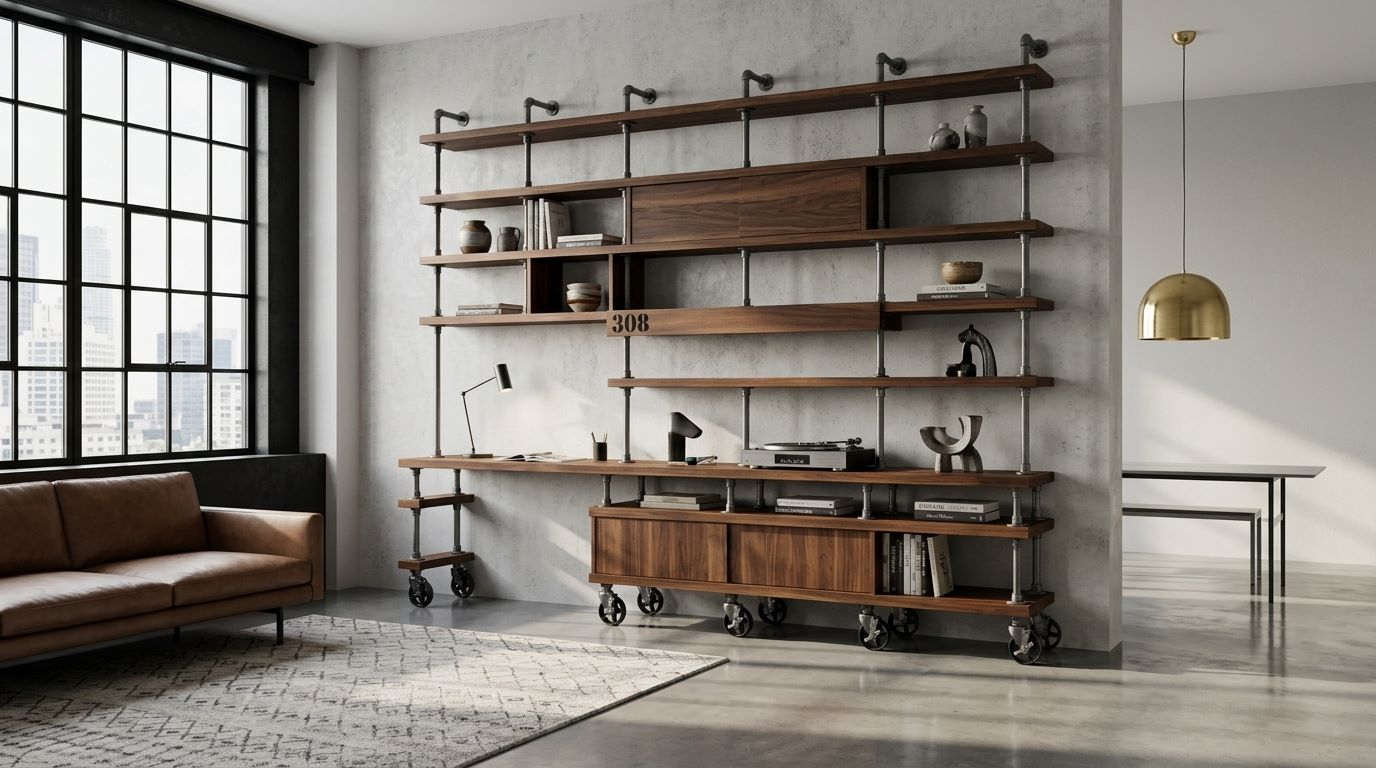
2010 was the year the product line expanded fast. The A-Frame table. The Ellis media console. The 308 Shelf. Each piece was an experiment — what happens when you take structural steel logic and apply it to residential furniture? What happens when reclaimed Philippine mahogany from 1912 school bleachers becomes a restaurant hostess stand? The answer, consistently, was that people responded to the authenticity. You couldn’t fake the weight. You couldn’t fake the patina. You couldn’t fake the weld.
By mid-2010, I was getting commercial commissions. The Smith Commons restaurant in Washington DC ordered cafe tables, bar tables, and a hostess stand. That hostess stand became one of my favorite pieces — reclaimed wood originally installed as bleacher seats in 1912, handmade iron work, wiring access from top to bottom for a monitor and keyboard, lattice work, rivets, stenciling. It was the most complex thing I’d built. It shipped across the country and went into a real restaurant that was getting reviewed in national publications.
2011: The warehouse, the crank table, and the copies
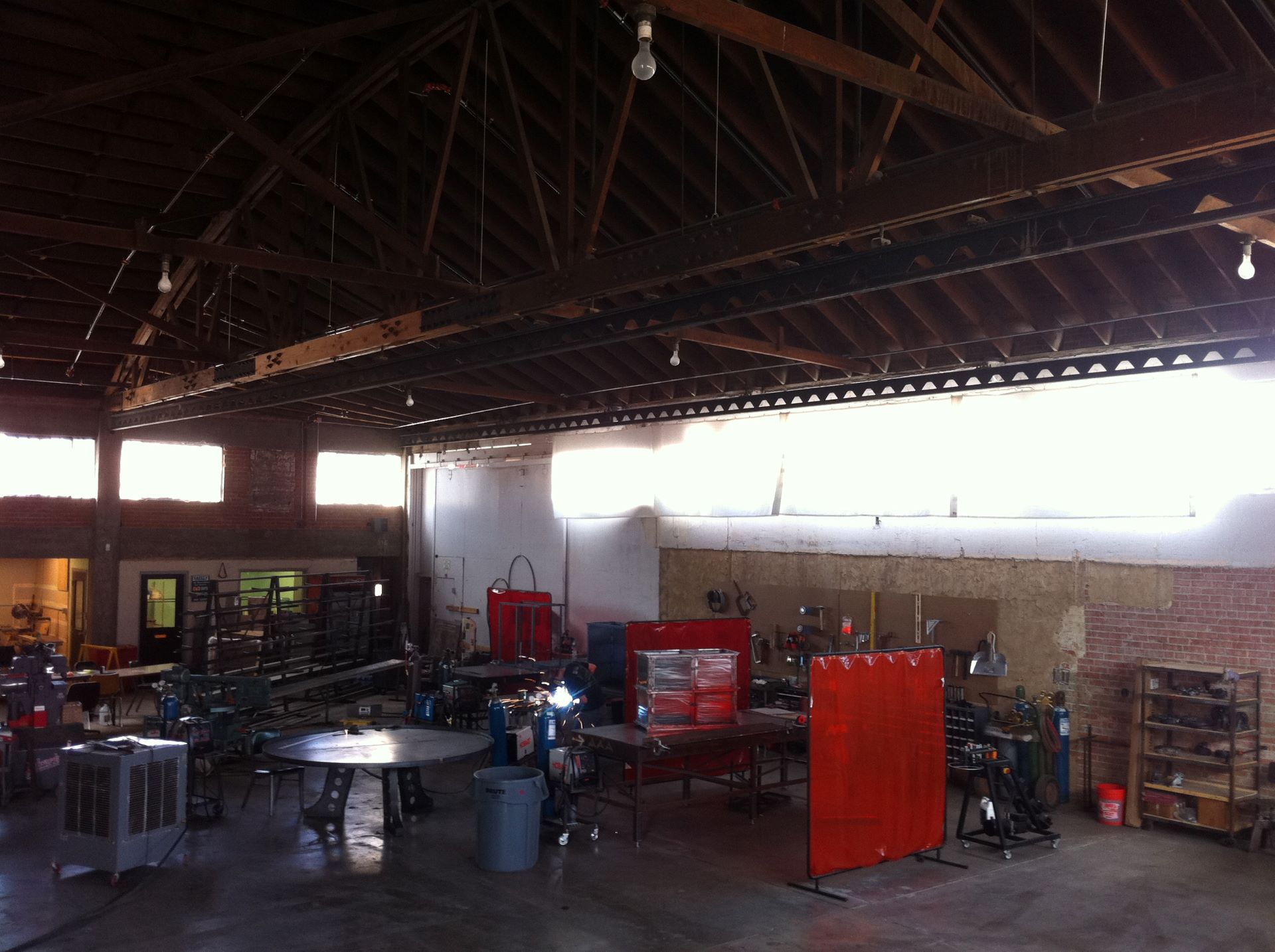
In May 2011 we moved into a 4,000 square foot historic warehouse in downtown Phoenix — a building designed by a student of Frank Lloyd Wright in the 1940s. Within two months we were at 6,000 square feet and hiring welders and fabricators. The lead time had stretched to six weeks because demand was outrunning capacity. I was trying to get it back under four.
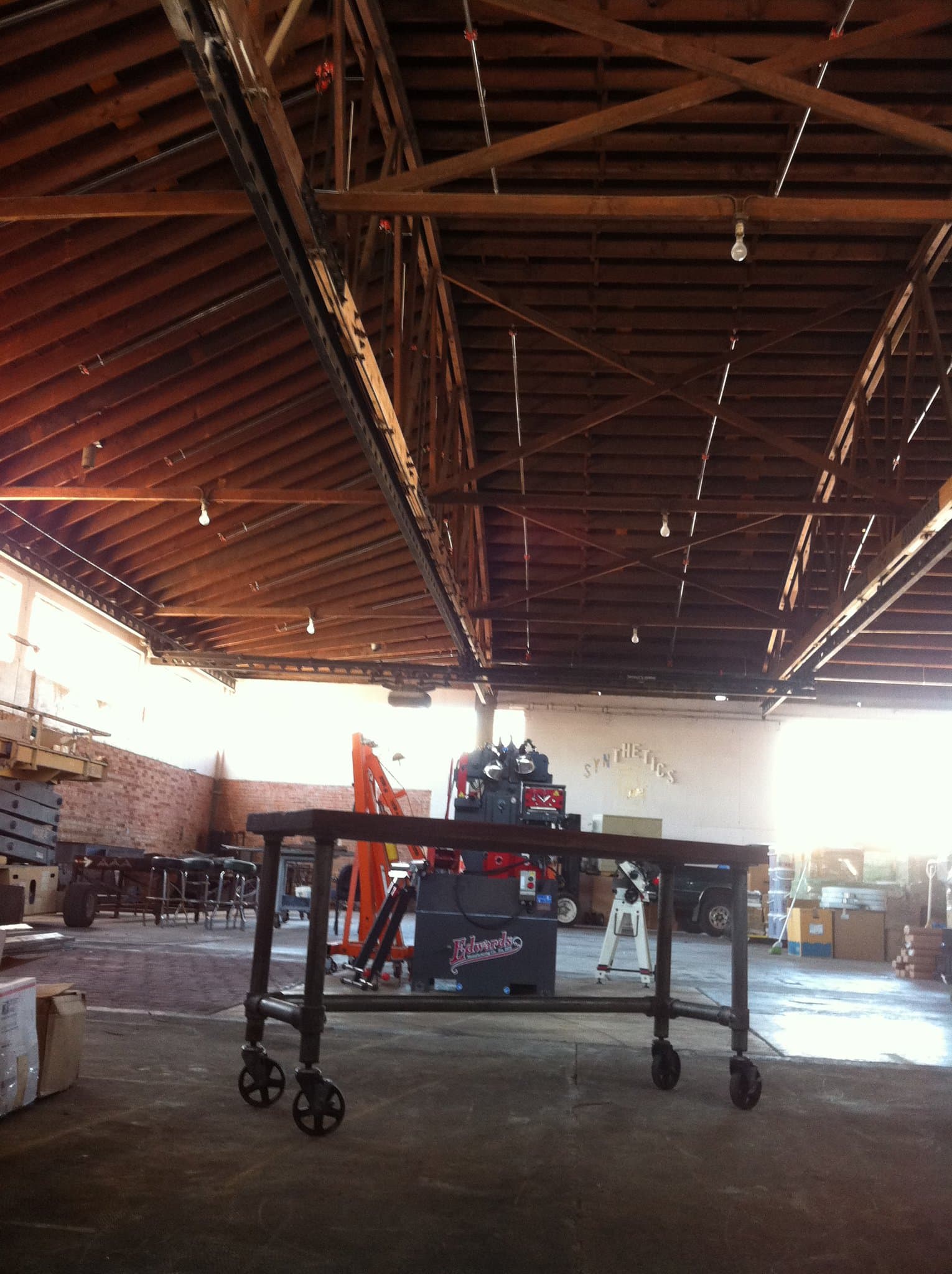
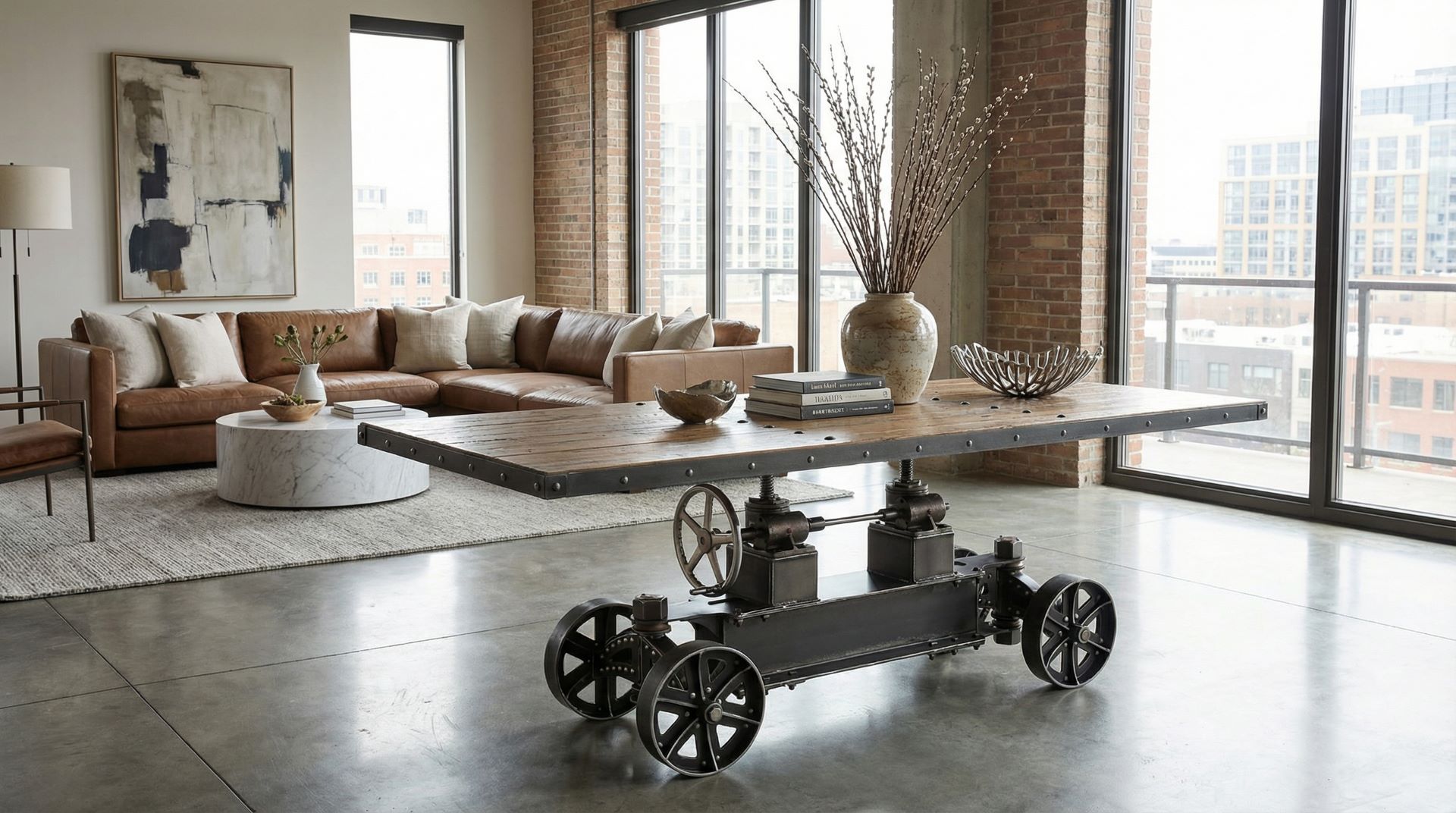
July 2011 was when the crank table appeared. I built a height-adjustable desk with a 10-inch cast iron wheel — turn the wheel, the top goes up or down, from 25 to 35 inches. It weighed around 600 pounds. The mechanism was a two-ton rated screw jack. The top was heavy gauge plate steel. It could be built as a desk, a dining table, or a conference table. I priced it at $5,750 as shown.
That piece changed what the business was. It became the product that defined Vintage Industrial in the market — the crank table. The height-adjustable industrial table with the cast iron wheel. Nothing like it existed anywhere in the furniture market at the time. Within months, people were calling specifically for it.
Also in early 2011, I walked into a furniture store in Phoenix and found a piece I recognized immediately. It was my Ellis design — copied by a manufacturer in India, imported, and sitting on the showroom floor at roughly half the weight and a fraction of the quality. I’d been building that design for a year. India was my fifth-largest web traffic source and now I understood why. They were watching, copying, and shipping.
My reaction, after the initial fury, was clarity: the copies looked like cheap versions of something that was clearly worth copying. The market had validated the aesthetic. And no one could replicate the weight, the material, the hand work, or the provenance. The originals were worth more because they were the originals.
2012: National press and the movement takes off
By 2012 we were in the press regularly. Phoenix Business Journal. Fox News. The Today Show and DIY’s Man Cave on the same weekend in June. The industrial furniture trend was being covered as a cultural moment — not just a furniture category. Publications were writing about why people wanted it, what it said about the desire for authenticity and durability in a world of disposable goods.
The question I kept getting asked in interviews was: where did this come from? My answer was always the same — from the frustration of buying things that fell apart, from Ethan Allen furniture that lasted decades versus Target particle board that bowed after a year, from the realization that the most beautiful objects were the ones built to work, not built to look like they worked.
The industrial furniture trend that design publications were covering in 2012 had roots in something genuine. The French industrial aesthetic of the 1940s. The American factory furniture of the same era. The honest construction that showed how a thing was made rather than hiding it. What Vintage Industrial did was bring that sensibility into the contemporary market — made to order, in real materials, by real fabricators, with a real lead time — at a moment when the market was ready to receive it.
What happened to the market — and what’s happening now
The years after 2012 brought exactly what you’d expect when a trend gets validated. Mass market versions appeared everywhere. Big box stores started carrying industrial-look furniture in laminate and thin steel tube. IKEA released industrial-adjacent lines. The copies multiplied at every price point. The aesthetic spread so far from its origins that “industrial” became a style descriptor that had almost nothing to do with actual industrial construction.
The original brands — the ones that were actually building in structural steel and solid hardwood — continued to serve a specific buyer: the one who understood the difference. Law firms that needed a conference table that would still look right in 20 years. Tech companies that wanted an office that felt built rather than assembled. Hospitality groups that needed chairs that could survive a casino floor. Those buyers didn’t disappear. They became more discerning.
In 2026, the trend is cycling back. Google Trends shows the trajectory. Design publications — Vogue, Architectural Digest — are calling out the “Warm Warehouse” aesthetic and “Grandpa Chic” as defining movements. The language is different but the instinct is the same as 2009: people want furniture that is what it looks like. Solid hardwood. Real steel. Built by hand. Made to last.
The difference between 2009 and 2026 is that the category now exists. The vocabulary is established. The buyer knows what they’re looking for. What they’re looking for is the original.
The pieces that defined the movement
A few specific designs shaped what became the Vintage Industrial aesthetic:
The A-Frame Table (2010) (see the piece) — Built originally as a dining table, immediately recognized as a desk too. Heavy gauge steel frame with tubular cross braces, solid sugar pine top, approximately 250 pounds. The A-Frame’s structural honesty — you could see exactly how it was built and why it wouldn’t move — set the template for everything that followed in the line.
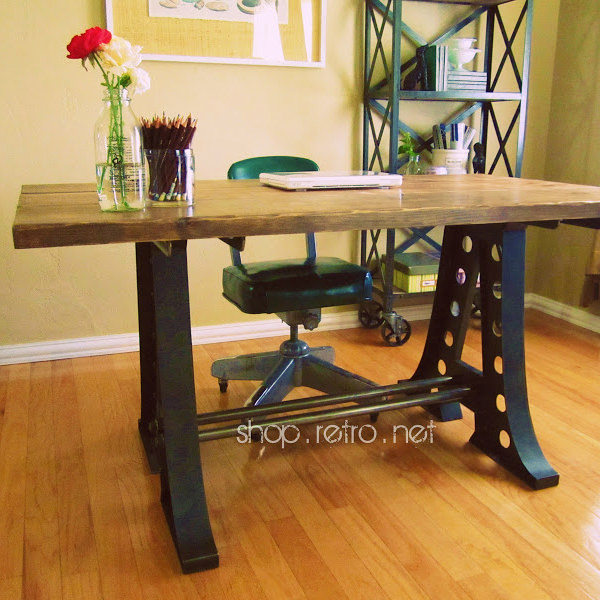
The Ellis Console (2010) (see the gallery) — A media console that became a product family: console tables, sideboards, dressers, entertainment centers. Named after an island associated with American arrival and reinvention. Deployed at MGM Casino. Still in the line today.
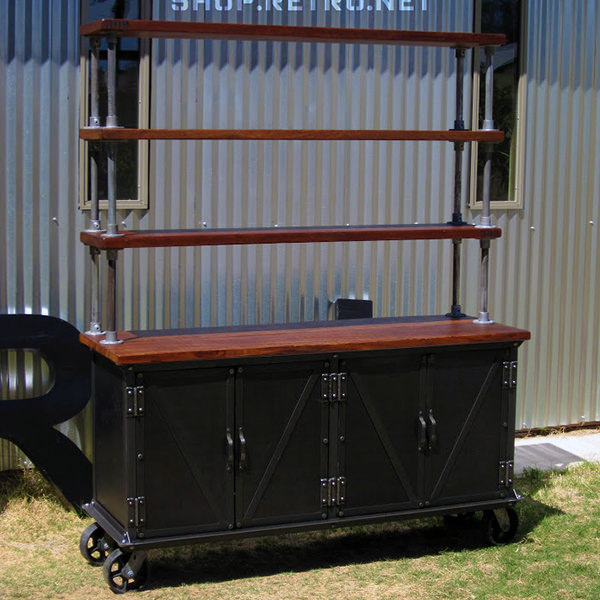

The 308 Shelf (2010) (see the piece) — A shelving unit in solid African mahogany on cast iron casters. The piece that went into a Ralph Lauren Home Store showroom in 2011 and put Vintage Industrial in front of a different buyer entirely.
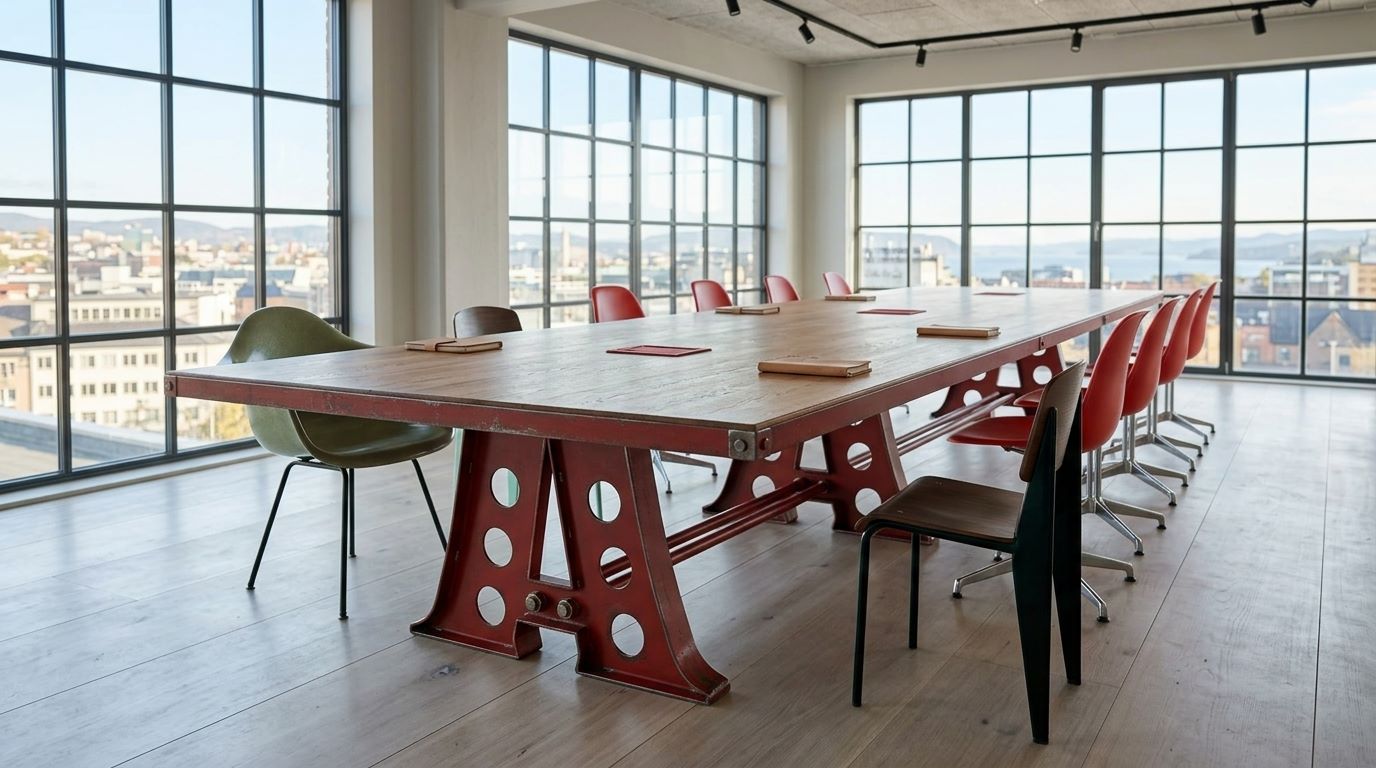
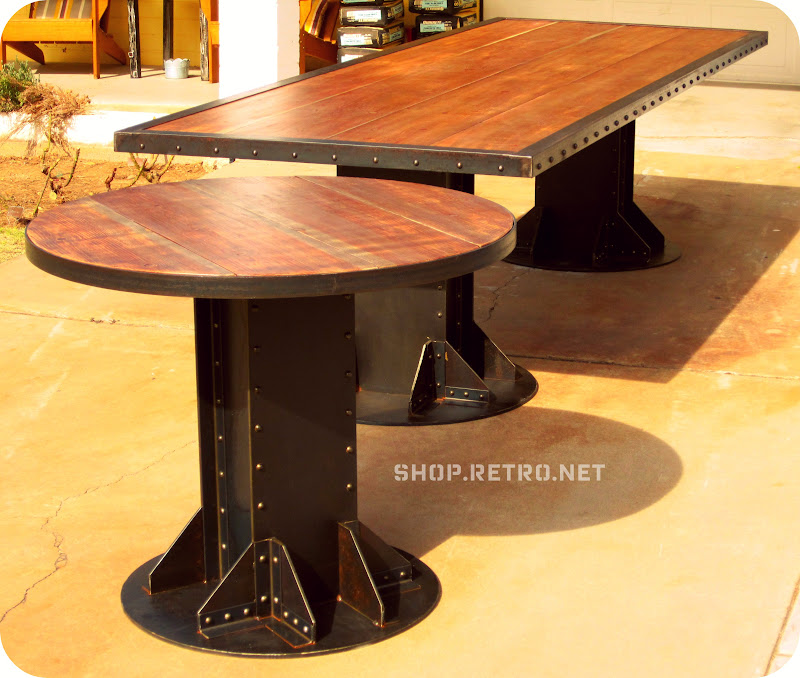
The I-Beam Conference Table (2011) (see the piece) — Structural I-beam steel base, solid hardwood top, riveted construction. The first major commercial conference table. Ten feet long, 1,000 pounds. The piece that said this was not just residential furniture.

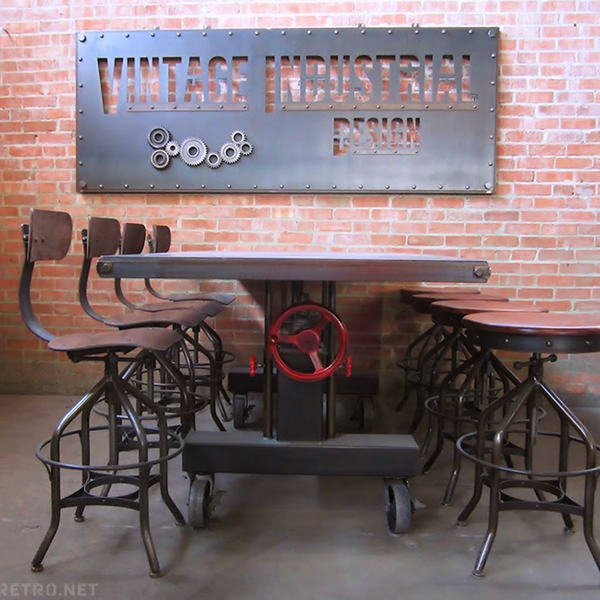
The Crank Table (2011) (see the piece) — The defining product. Height-adjustable via a hand-cast iron wheel. Two-ton rated screw mechanism. Built as a desk, a dining table, or a conference table. The piece that competitors have tried to replicate ever since.

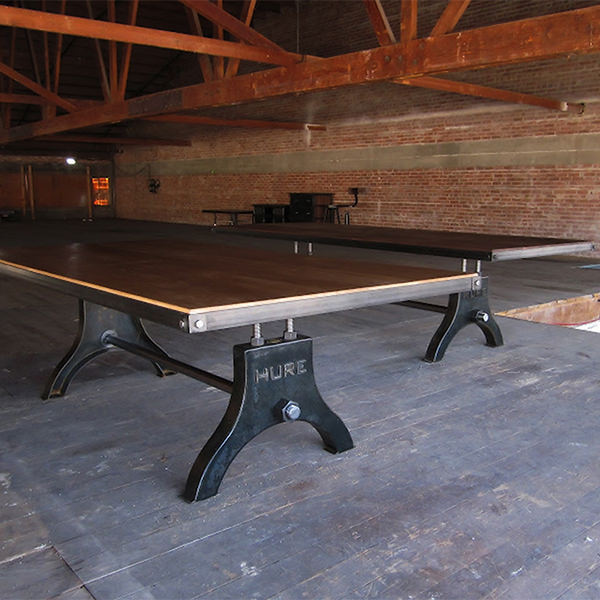
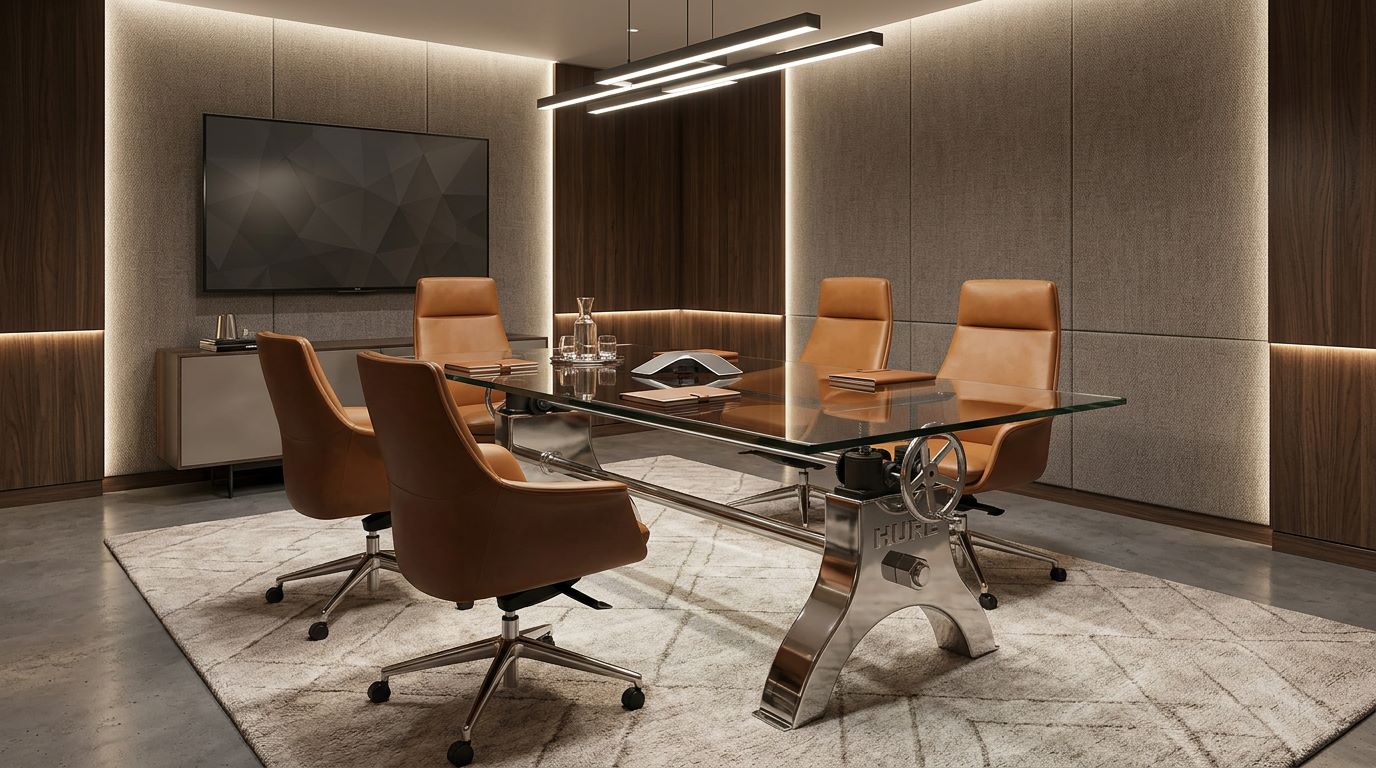
The Hure (2011) (see the piece) — Named after a French machinist. A desk and dining table design with refined proportions and solid hardwood top. Commissioned for MGM restaurants on the Las Vegas Strip.
The Train Table (2013) (see the piece) — The piece that went to a Four Seasons property. Structural steel base inspired by railway trestle construction. The commission that put Vintage Industrial in the luxury hospitality conversation.

The originals are still available.
Every piece is built to order in hot-rolled steel and solid hardwood. No catalog. No compromises. The same construction philosophy that started this in 2009.